
The honeymoon phase of "cloud-only" AI is officially over.
As we move through 2026, many leadership teams are staring at cloud invoices that look more like mortgage payments than operational expenses.
If you feel like you are writing a blank check to your cloud provider every month, you are not alone.
The reality of modern enterprise AI is that GPU-heavy workloads, massive datasets, and constant inference requests have broken the traditional cloud-first model.
While the cloud offers unmatched speed for experimentation, it often lacks the cost-efficiency required for long-term production.
To stay competitive, you must move beyond the "rented" infrastructure mindset and embrace the strategic power of hybrid architecture.
The Cloud Trap: Why 2026 is the Year of Bill Shock
In the early days of generative AI, the priority was speed to market at any cost.
Companies rushed to deploy large language models (LLMs) on public cloud platforms, treating the massive GPU costs as a necessary evil of innovation.
By mid-2026, however, these "innovations" have become massive cost centers that drain capital away from other critical business initiatives.
Current industry data indicates that approximately 29% of cloud spend is effectively wasted through inefficient resource allocation and idle capacity.
When you consider that a single GPU cluster can cost thousands of dollars per hour, that waste translates into millions of dollars in lost annual revenue.
You cannot afford to treat AI infrastructure as a utility that you simply "turn on" and ignore.
"The cloud is a leased luxury; infrastructure is an owned asset."
GPU Scarcity and Premium Pricing
- Cloud providers often charge a massive markup on H100 and B200 GPU instances.
- On-demand pricing is designed for short-term spikes, not 24/7 production inference.
- Reserved instances often lock you into hardware that might be obsolete in 18 months.
The Hidden Tax of Data Egress
- Moving petabytes of training data into the cloud is often free, but taking it out: or moving it between regions: is prohibitively expensive.
- This "data gravity" creates a financial barrier that makes it nearly impossible to switch providers later.
- You are essentially paying a tax on your own intellectual property every time you try to leverage it outside your primary cloud environment.
Decentralize or Decline: The Hybrid Advantage

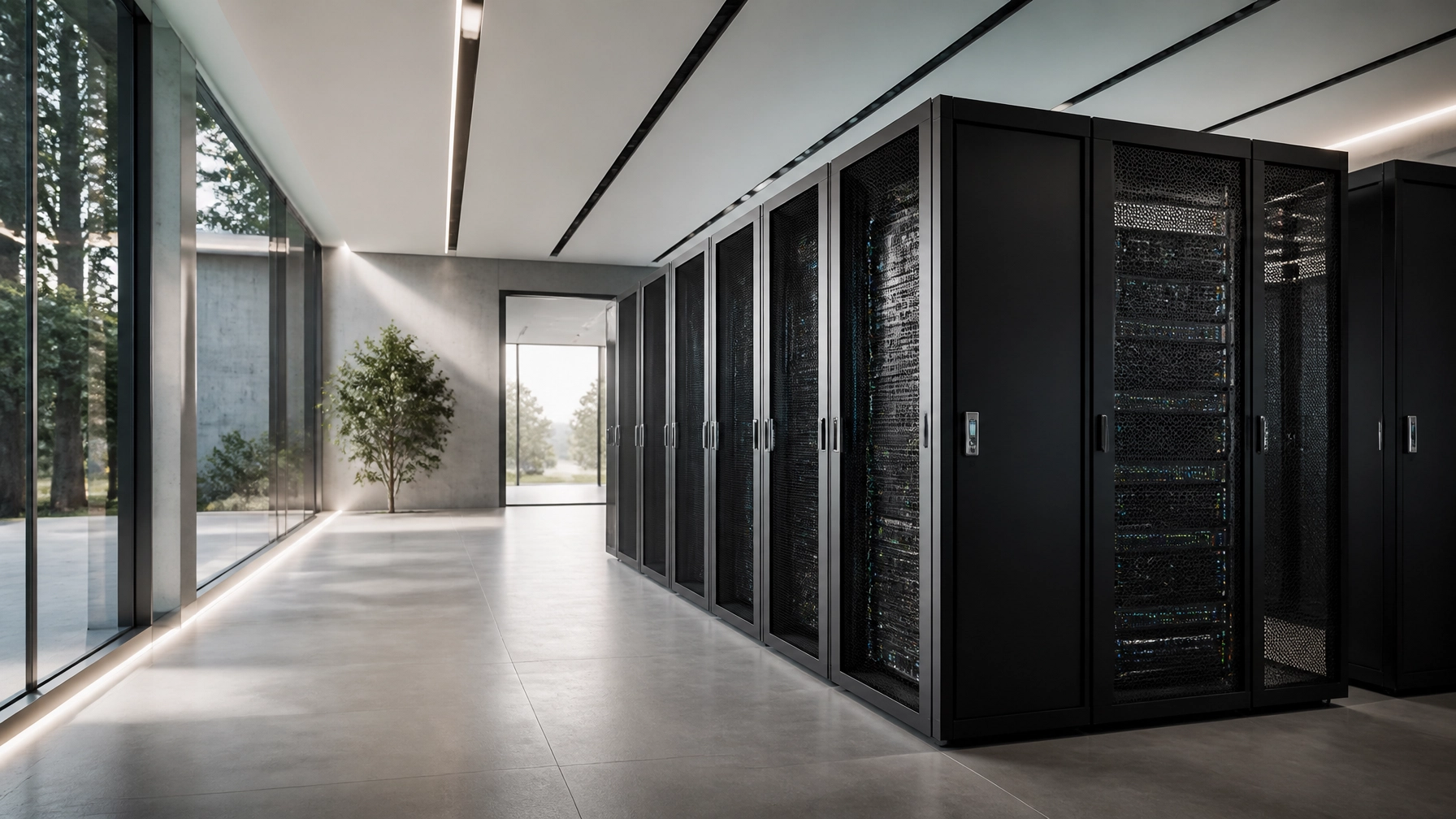
The most successful organizations in 2026 are shifting toward a hybrid model that blends public cloud, private colocation, and edge compute.
This approach allows you to optimize your spend based on the specific nature of each workload rather than using a one-size-fits-all solution.
Think of it as a diversified investment portfolio for your technology stack.
By deploying steady, predictable AI workloads on private infrastructure, you can reduce your operational costs by up to 40% compared to equivalent cloud instances.
You keep the public cloud for what it does best: bursting during peak demand and testing new models without upfront capital expenditure.
This strategic balance ensures that you have the performance you need without the crippling monthly overhead.
Map the power dynamics of your current infrastructure to identify where "steady-state" workloads are being overcharged.
Control the narrative of your technology spend by moving these predictable jobs to private or colocated environments where you have more control over the hardware and the cooling costs.
Forward-looking leaders recognize that infrastructure is not just a technical detail: it is a competitive financial weapon.
Strategic Asset vs. Leased Luxury: The New ROI

To truly optimize your AI spend, you must shift your perspective on what "ROI" means in the context of infrastructure.
In a cloud-only world, you are paying for the convenience of someone else's hardware and maintenance.
In a hybrid world, you are building a strategic asset that adds long-term value to your balance sheet.
Unit Economics for AI
- Measure your Cost per 1,000 Tokens across different environments to see where you are overpaying.
- Track GPU Utilization Rates; if your cloud GPUs are idling at 30% utilization, you are literally throwing money away.
- Align your tech spend with business outcomes, such as Cost per Ticket Resolved or Revenue per AI Interaction.
Capital vs. Operational Expenditure
- Private infrastructure allows you to leverage CapEx for long-term savings, which is often more tax-efficient for established enterprises.
- Use our technology strategy development services to determine the ideal mix of CapEx and OpEx for your specific growth stage.
- Balance your short-term liquidity with your long-term operational excellence goals.
"Innovation without optimization is just expensive experimentation."
Deploying a custom software solution that is designed for a hybrid environment ensures that your code is not tied to a single cloud's proprietary API.
This level of architectural foresight prevents the "technical debt" that often follows a rapid AI rollout.
Think beyond the moment and design for a future where hardware costs will continue to fluctuate.
Kill the Egress: Retaining Data Gravity

Data is the lifeblood of your AI, but in the cloud, it can also be your biggest liability.
High egress fees are specifically designed to keep your data: and your business: locked into a single provider's ecosystem.
A hybrid architecture allows you to keep your primary data stores where they are most cost-effective and secure.
By processing data at the edge or within a private colocation facility, you eliminate the need for constant, expensive data transfers.
This not only saves money but also significantly reduces latency for real-time AI applications, such as manufacturing automation or high-frequency trading.
When your compute lives next to your data, your entire AI pipeline becomes faster and more resilient.
- Edge Inference: Run your models where the data is generated to avoid transit costs.
- Local Caching: Use intelligent caching layers to minimize the amount of data that needs to travel to the cloud for processing.
- Private Interconnects: Leverage direct, high-speed connections between your private data center and the public cloud to bypass the public internet and reduce costs.
Leverage your data as a strategic moat rather than a weight that anchors you to a single vendor.
Navigate the complexities of digital transformation consulting by prioritizing data sovereignty and portability from day one.
Optimizing your data gravity today will prevent a multi-million dollar migration headache three years from now.
Portability as Policy: Breaking the Chains

Cloud lock-in is the silent killer of technology agility.
If your AI models only run on one provider's specific hardware or software stack, you have lost your most important leverage: the ability to leave.
Hybrid architecture demands a "portability-first" policy that keeps your options open.
"Portability is not just a technical feature: it’s a financial hedge against vendor volatility."
Standardize with Kubernetes
- Use containerization to ensure your AI workloads can move seamlessly between cloud and on-prem.
- Avoid proprietary cloud "AI Platforms" that use closed-loop ecosystems.
- Deploy an open-source orchestration layer to manage your GPU resources across different providers.
The Internal Model Gateway
- Wrap external AI APIs (like OpenAI or Anthropic) inside an internal gateway.
- Your applications call your gateway, not the vendor's API directly.
- This allows you to swap providers or route traffic to a cheaper, self-hosted model without rewriting a single line of application code.
Open-Source Model Strategy
- Invest in fine-tuning smaller, domain-specific open-source models (like Llama 3 or Mistral) that you can host yourself.
- These models often outperform generic "frontier" models for specific business tasks and cost 90% less to run.
- Reserve the most expensive cloud models only for the most complex, non-routine tasks.
Navigate the shifting landscape of 2026 by ensuring your technology stack is as modular as your business strategy.
Don't let a vendor’s roadmap dictate your innovation cycle or your profit margins.
Strategic independence is the only way to ensure that your AI initiatives remain sustainable in a volatile market.
Your 2026 Blueprint: Deploying the Hybrid AI Model
The transition to hybrid architecture is not an overnight task, but it is an essential one for any leader serious about operational efficiency.
Start by auditing your current cloud spend and identifying the "zombie" workloads that are draining your budget without delivering proportional value.
From there, map out a three-stage transition plan that prioritizes high-cost inference and data-intensive training for repatriation.
Audit and Analyze
- Tag every AI resource by department, project, and model type.
- Identify the top 20% of workloads that account for 80% of your cloud bill.
Pilot Private Infrastructure
- Select a predictable, high-utilization workload for a pilot in a colocation facility.
- Compare the total cost of ownership (TCO) including hardware, power, and cooling against your current cloud spend.
Implement Managed Abstraction
- Deploy an internal API gateway to decouple your apps from specific cloud vendors.
- Standardize your MLOps pipeline on portable tools like MLflow or Kubeflow.
Control the destiny of your technology platform by making architecture a core part of your financial planning.
At TechStrategy Innovations, we specialize in helping leadership teams align tech initiatives with business goals through customized roadmaps.
Stop being a passenger on your cloud provider's growth journey and start driving your own.
The future of AI is not in the cloud or on-prem: it is wherever your strategy dictates it should be.
{"@type":"BlogPosting","image":"https://cdn.marblism.com/rqQYjwwUA2b.webp","author":{"url":"https://techsi.tech","name":"TechStrategy Innovations","@type":"Organization"},"@context":"https://schema.org","headline":"Stop Wasting Money on AI Cloud Bills: Why Hybrid Architecture is the 2026 Secret Sauce","publisher":{"logo":{"url":"https://techsi.tech/logo.png","@type":"ImageObject"},"name":"TechStrategy Innovations","@type":"Organization"},"articleBody":"The honeymoon phase of 'cloud-only' AI is officially over. As we move through 2026, many leadership teams are staring at cloud invoices that look more like mortgage payments than operational expenses... [Full content available in markdown above]","description":"Learn how hybrid architecture can reduce AI cloud costs by up to 40% and help your business avoid cloud lock-in in 2026.","datePublished":"2026-05-22"}